
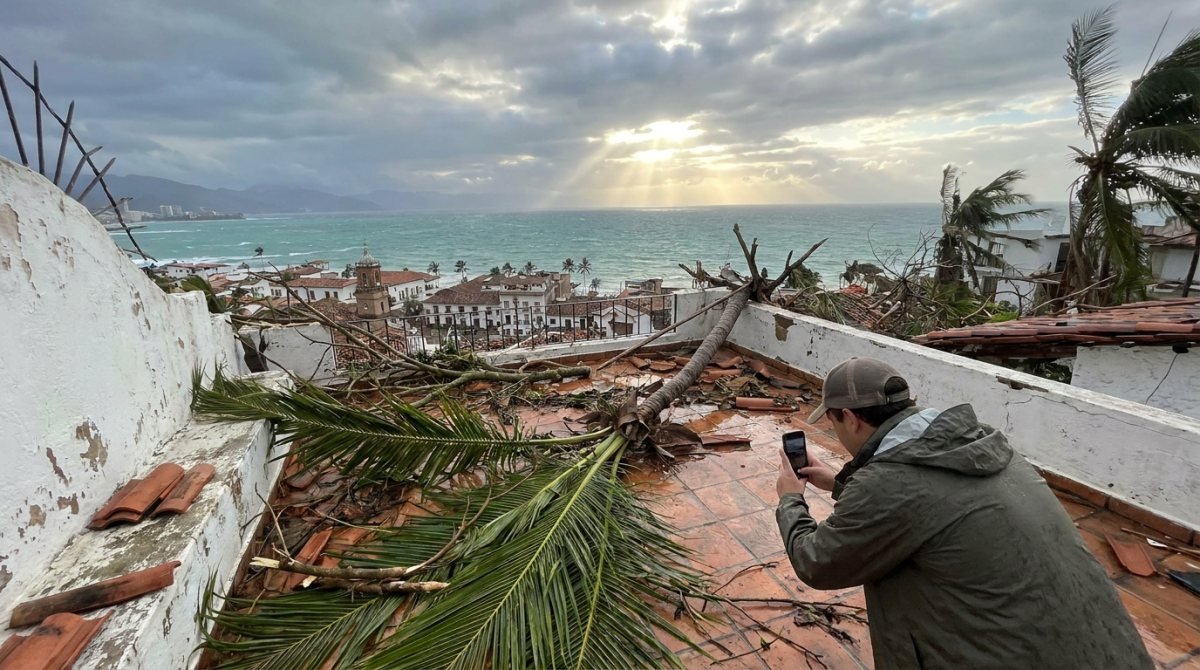
The morning after a hurricane in Puerto Vallarta usually looks deceptively calm. The sky clears, Banderas Bay goes flat again, and the street is full of palm fronds, mud and neighbours with brooms. But storms on this coast rarely do their worst damage where you can see it. Wind-driven rain finds its way under roof membranes, saturated hillsides push on retaining walls for days, and the water that soaked into a concrete slab can take weeks to show up as a stain, a blister in the paint or a musty smell in a closet.
This checklist is written for owners of houses, villas and condos in Puerto Vallarta and the Riviera Nayarit — Nuevo Vallarta, Bucerías, La Cruz, Punta Mita and Sayulita — where homes are built in concrete and block, roofs are flat and depend on waterproofing, and every property runs on its own tinaco, cistern, pump and LP gas tank. It walks through what to do in the first hours, how to document what happened, what to check system by system, and which problems tend to appear only after the rain is long gone. It is practical guidance from a builder's point of view, not legal or insurance advice.
The First Hours: Safety Before Anything Else
Before you look at a single crack, make sure the property is safe to walk through. Many accidents happen during clean-up, not during the wind.
Smell for gas before you switch anything on
If you smell LP gas when you arrive, do not operate light switches, do not start a generator nearby and do not light anything. Close the valve at the tank or the regulator if you can do it safely, open doors and windows, and step outside. Only once the smell is gone should anyone reopen the system — and if the tank moved, its supports were hit by debris or a line was bent, have the installation checked before using it again.
Treat water and electricity as a single hazard
If water entered the home, or you can see wet ceilings around light fixtures, turn off the main breaker before walking through flooded rooms. Look for exposed or sagging CFE service cables near the house, and keep everyone away from them; that is a matter for the utility, not a homeowner with a broom. Inside, do not reconnect appliances, pumps or mini-splits that got wet until an electrician has checked the circuits, the panel and the grounding.
Look up and around before you go in
Walk the outside of the property first. Check for leaning trees, loose roof parapets, hanging aluminum frames, broken glass in the window tracks and cracked or bulging retaining walls on the uphill side. On hillside homes in the Zona Romántica, Conchas Chinas, Amapas or the slopes above Marina Vallarta, a wall that moved even slightly should be treated as unsafe until someone qualified has looked at it. If anything looks structural — a new diagonal crack in a beam, a slab that sags, a column that shifted — keep people out of that area.
Document Everything Before You Clean Up
Whether or not you plan to file a claim, a clear record of the damage is valuable. It helps you, your property manager, your condo administration and any contractor you hire understand what happened, and it protects you if a problem appears months later and someone asks whether it was there before. Your policy and your insurer set the actual requirements, so read your coverage and ask them directly; what follows is simply good practice.
What to photograph
- Wide shots first: every façade, the roof, the terrace and the garden, so the overall condition is clear.
- Then close-ups: each crack, stain, broken pane, bent frame, torn membrane and fallen tree, with something in the frame for scale.
- Water lines: the height water reached on walls, doors and furniture, and any mud or debris left behind.
- Equipment labels: nameplates of the A/C condensers, pumps, water heater and appliances that got wet.
- Video walkthrough: one slow pass through every room with narration of what you see.
How to organize it
Keep the original files with their dates, and do not edit them. Make a simple list by area — roof, exterior, each room, installations — with a short description and the photo numbers. Write down when you first noticed each problem. If you make emergency repairs to stop further damage, such as tarping a roof or boarding a broken window, photograph the condition before and after, and keep receipts. Avoid throwing out damaged materials until they have been documented.
If you are not in town
Many owners on this coast are abroad when a storm hits. If that is your situation, ask whoever has access — a property manager, a neighbour, a caretaker — to follow the same order: safety, wide photos, close-ups, video. A professional storm damage inspection report organized by system and priority gives you something far more useful than a few phone photos sent over WhatsApp.
The System-by-System Hurricane Damage Checklist
Once the property is safe and documented, go through it system by system. This is the part where most owners miss things, because the damage that matters most is often in places you do not walk every day: the roof, the cistern, the pump room and the back of the condensers.
Roof and waterproofing
Flat concrete roofs are the norm here, and their protection depends entirely on the waterproofing membrane. After a hurricane, walk the roof (only if it is safe) and look for:
- Lifted, torn or blistered membrane, especially at edges, corners and around equipment bases.
- Cracks in the parapets and in the joint between the parapet and the slab.
- Ponding water that has not drained a day after the rain stopped.
- Damage from debris: branches, tiles, antennas or a neighbour's materials that landed on the roof.
- Loose or broken solar heaters, satellite dishes and their anchors, which can puncture the membrane.
Even a small tear lets water travel under the membrane and appear somewhere else entirely. If the system was already old, a storm is often what finally exposes it; a proper waterproofing repair or replacement is cheaper than repeated interior damage.
Drains, gutters and downspouts
Clogged roof drains are one of the main reasons flat roofs leak during a storm. Clear leaves, sand and debris from every drain and downspout, then run water through them to confirm they flow. Check the storm-water path at ground level too: patio drains, garden channels and the street connection. If water backed up into the house through a floor drain, note it — it can point to a blocked or undersized line.
Windows, doors and aluminum frames
Wind pressure and flying debris are hard on aluminum and glass. Look for cracked or chipped panes, bent frames, sliding doors that no longer run smoothly, missing or torn seals and water stains under the sills. Water that entered through a window often soaks the wall below and the floor tiles, so check those areas carefully. Frames that flexed may need adjustment, new seals or replacement through an aluminum and glass specialist.
Air conditioning condensers
Mini-split condensers usually sit on roofs and terraces, fully exposed to wind and salt spray. Check that each unit is still firmly anchored, that its fins are not crushed, that refrigerant lines and their insulation are intact and that the electrical connection did not get soaked. Do not turn a unit on if it was submerged or knocked over. Have it inspected and cleaned first; storm water carries salt and sand that accelerate corrosion. Our air conditioning team handles exactly this kind of post-storm service.
Tinaco, cistern and pumps
This is the check most people forget, and one of the most important. Floodwater or runoff that enters a cistern contaminates the household water supply. Look for:
- Cistern lids that were displaced, cracked or submerged.
- Muddy or discoloured water, or a new smell.
- Tinacos that moved, cracked or lost their lid on the roof.
- Hydropneumatic pumps and pressure tanks that got wet or tripped.
If there is any chance the cistern was contaminated, do not drink or cook with that water until it has been emptied, cleaned and disinfected, and use bottled water in the meantime. Pumps that were underwater need to be checked before they are powered again. For broken lines or a damaged pump room, bring in a hydraulic installations crew.
LP gas tank and lines
Stationary LP tanks are often on roofs or side yards. Make sure the tank is still level and secured, that its legs and base are intact, that the regulator was not hit and that the copper or flexible lines are not crushed or stretched. Do a soapy-water test on accessible joints if you know how, and if anything looks wrong, keep the valve closed and call a qualified gas installation technician.
Electrical panel and outlets
Check the main panel for moisture, rust or burn marks. Outdoor outlets, garden lighting, pool equipment circuits and anything at floor level in a flooded room should be tested before use. Breakers that keep tripping are telling you something is wet or damaged. Water inside conduits can cause problems long after the surface dries, so if the home flooded, ask for a full electrical installation check rather than just resetting breakers.
Palapas and outdoor structures
Palm-thatch palapas suffer in strong wind. Look for missing or loose thatch, shifted or cracked wooden posts, rusted or broken ties and any section that now sags. Wet palapa material is heavy, and structures that look fine can fail after the next rain. The same applies to pergolas, shade sails and outdoor kitchens: check anchors, fasteners and anything made of wood that stayed wet.
Trees and landscaping
Leaning trees, broken limbs hanging over the roof and roots lifted on one side are all hazards. Keep an eye on trees close to the house, walls and power lines, and remove debris that blocks drainage paths.
Retaining walls and slopes
On hillside lots, this is the most critical exterior check. Look for new cracks, bulging, leaning, water seeping through the face of the wall, blocked weep holes and soil movement at the top or bottom. A slope that is still saturated can keep moving for days after the storm. Mark existing cracks with a pencil line and date so you can tell if they grow. Any movement should be evaluated by someone with structural and foundation experience.
Pools and pool equipment
Do not drain a pool after a storm without advice; on saturated ground, an empty pool can shift or lift. Remove debris, check the water chemistry, inspect the pump, filter and heater for water damage and look for new cracks in the shell or the deck around it. Check the pool equipment's electrical connection before switching anything on.
Hidden Damage That Appears Weeks Later
The checklist above covers what is visible in the first days. The more expensive problems often show up later, once the home has been closed up again and the rainy season continues.
Moisture trapped in slabs and walls
Concrete and block soak up water and release it slowly. A roof slab that took on water under a torn membrane can stay wet inside for a long time, and that moisture eventually shows up as peeling paint, efflorescence, bubbling plaster, mold behind furniture or rust stains from reinforcing steel. By the time you see it, the water has usually been there for weeks.
Why a thermal camera follow-up makes sense
A thermal camera shows temperature differences on walls, ceilings and floors that often correspond to moisture, missing insulation or active leaks, and a moisture meter confirms what the camera suggests. A follow-up thermal imaging inspection a few weeks after the storm can find water paths before they turn into visible damage, and it helps decide whether a roof needs a patch or a full new system.
Signs to watch for in the following weeks
- Musty smells in closets, bathrooms or rooms that stay closed.
- New hairline cracks or stains on ceilings under the roof.
- Doors and wooden furniture that start to swell or stick.
- Electrical outlets or breakers that fail intermittently.
- Low water pressure or a pump that cycles more than usual.
- Rust spots on window frames, railings and A/C units.
A Note for Absentee Owners
A large share of homes in Puerto Vallarta and the Riviera Nayarit sit empty for part of the year. That is exactly when a storm does the most damage, because nobody is there to clear a drain, close a valve or open the windows afterwards. If you are not in town:
- Have a clear plan with your property manager or caretaker for before and after a storm warning.
- Make sure someone has keys, knows where the gas valve and main breaker are and has your contacts.
- Ask for a written, photo-based report after any significant storm, not just an "everything looks fine" message.
- Consider an independent inspection that covers the roof, installations and moisture, with a video call to walk you through the findings.
A bilingual report organized by system, with each finding flagged as Safety, Urgent, Maintenance or Monitor, lets you make decisions from abroad without guessing.
Before the Next Season: Preparing Your Home
The best moment to think about the next hurricane is right after this one, while the weak points are still obvious. Pacific hurricane season runs roughly from mid-May or June through November, overlapping with the June–October rainy season, so there is a window between seasons to fix what failed.
- Roof: repair or replace damaged waterproofing well before the rains, and clear drains before every season.
- Windows and doors: renew seals, adjust frames and replace cracked glass.
- Equipment: check anchors on A/C condensers, solar heaters, tinacos and the LP tank.
- Trees: prune branches over the roof and remove weak or dead trees near the house.
- Water: clean and disinfect the cistern and tinaco, and confirm lids seal properly.
- Paperwork: keep current photos of the property in good condition, so you have a reference after the next storm.
A scheduled inspection and maintenance program turns this into a routine instead of an emergency. Our inspection maintenance plans are designed for owners who want someone to check the house before and after each season.
When to Call a Professional
Some post-storm tasks are fine for an owner with a broom, a camera and common sense. Others are not. Call a professional when:
- You see new cracks in beams, columns, slabs or retaining walls.
- You smell gas or suspect a damaged line.
- Water reached outlets, the panel, pumps or condensers.
- The roof membrane is torn or water is coming through ceilings.
- The cistern may be contaminated.
- You need a clear, documented picture of the damage for your own records, your HOA or your insurer.
An independent storm damage inspection in Puerto Vallarta gives you a full photo report organized by system, with priority levels and moisture readings, written by an inspector with a builder's background who can also tell you roughly what each repair involves. There is no obligation to hire PVR for the repairs; the report is yours to use with any contractor. To see everything our inspections division covers, visit our home inspection services page.
Frequently Asked Questions About Hurricane Damage in Puerto Vallarta
What should I check first after a hurricane in Puerto Vallarta?
Safety comes first: gas smells, exposed or wet electrical installations, and any visible structural damage such as cracked beams or moving retaining walls. Only after those are ruled out should you start documenting and cleaning.
Can I drink the water from my cistern after a storm?
Not if there is any chance that runoff or floodwater entered it. If the lid was displaced or the water looks or smells different, use bottled water until the cistern and tinaco have been emptied, cleaned and disinfected.
How soon should I inspect the roof?
As soon as it is safe to walk on, ideally within the first days, so you can clear drains and spot tears before the next rain. A second look a few weeks later, ideally with a thermal camera, helps catch water that is already traveling inside the slab.
My house looks fine. Do I still need an inspection?
Not always, but many storm problems are invisible at first: water under the membrane, moisture in walls, contaminated cisterns, or salt and sand inside A/C units. If the storm was strong or the home was empty, an inspection gives you certainty.
Is a damage report useful for my insurance claim?
A clear, dated photo report organized by system is generally helpful documentation, but each insurer sets its own requirements. Check your policy and ask your insurer what they need; this is not legal or insurance advice.
I live abroad. Can the inspection happen without me?
Yes. Access can be coordinated with your property manager or caretaker, and the findings can be reviewed with you on a video call, with a bilingual written report to follow.
Do you inspect homes in the Riviera Nayarit too?
Yes. We work in Puerto Vallarta, Jalisco, and across Bahía de Banderas, Nayarit, including Nuevo Vallarta, Bucerías, La Cruz de Huanacaxtle, Punta Mita and Sayulita.
Get Your Home Checked After the Storm
A hurricane does not have to turn into a year of leaks and surprises. If your home, villa or condo went through a storm and you want to know exactly where it stands, contact PVR Contractors — by phone or WhatsApp at +52 322 301 6727 or at info@pvrcontractors.com — to schedule an inspection and get a clear, prioritized plan for what to fix and when.