
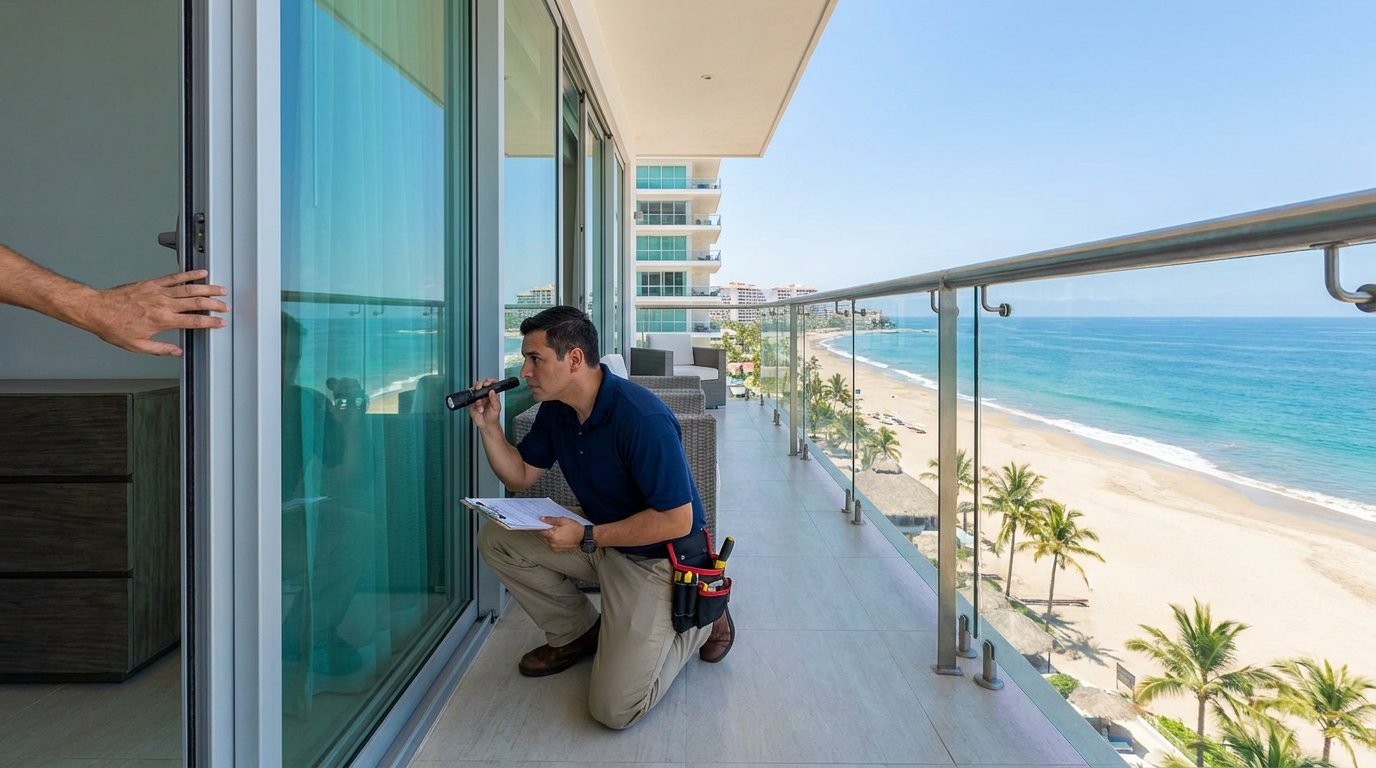
A condo inspection in Puerto Vallarta is two inspections in one
When you buy a house, you buy one structure. When you buy a condominium, you buy a unit plus a share of a building, a pool, a parking garage and a budget managed by the administración (the HOA). Your unit can be immaculate while the balcony slabs, facade or garage below are quietly deteriorating. Sooner or later, those shared problems become shared bills.
That is why our condo inspection in Puerto Vallarta looks at both layers. Inside the unit, we review the systems you will be directly responsible for. Outside it, we document what is visible in the building envelope and common areas so you can ask the right questions before you commit. It is a specialized version of our general home inspection Puerto Vallarta service, adapted to how condos actually age on this coast.
Unit vs. common areas: who is responsible for what
The reglamento (condominium bylaws) defines which elements are private and which are common. In many buildings, the interior finishes, fixtures, A/C units and appliances belong to the owner, while the structure, facade, roof, elevators and shared installations belong to the condominium. Balconies, windows and sliding doors fall into a gray zone: sometimes they are private, sometimes the HOA maintains the exterior side. Reading the reglamento tells you which repairs land on your account and which go through the HOA budget. This is not legal advice; your attorney or notario should review the documents with you.
During the inspection, we follow the same logic. Unit items are tested hands-on; common elements are inspected visually from the areas we are allowed to access. We do not open elevator machinery or certify structural capacity, but a builder can tell a lot from what is in plain sight.
HOA documents to request before you buy
Our inspector reviews the physical side only. The paperwork is your part of the homework, ideally with your agent and attorney. Before closing, ask the seller or the administración for:
- Reglamento de condominio: bylaws, rules on rentals, pets, renovations and what counts as a common area.
- Estados financieros: recent financial statements, including income, expenses and the list of owners behind on their cuotas.
- Actas de asamblea: minutes from recent owners' meetings. This is where upcoming projects, disputes and repair votes show up first.
- Fondo de reserva: the balance of the reserve fund and how it compares with the building's age and size.
- Constancia de no adeudo: a letter confirming the unit is current on maintenance fees.
Put those documents next to our report. If the minutes mention a facade project and we photographed spalling on three elevations, you have a clear picture of what is coming.
Building envelope, balconies and glass railings
Salt air is the main enemy of coastal condos. It drives corrosion into the rebar inside concrete, which then expands and cracks the surface, a process known as spalling. On a tower, the first places it shows are balcony edges, slab undersides and facade corners.
Balconies
We check the slope of the balcony slab, the condition of the waterproofing and whether water drains away from the sliding door instead of toward it. Cracks along the edge or rust stains underneath are noted and photographed.
Glass railings
Glass railings look great and hide their weak points well. We inspect clamps, posts, base shoes and anchors for corrosion, loose fittings or chipped glass edges. Stainless steel that is not marine grade often shows tea staining within a few seasons. Anything that affects fall protection goes straight into the Safety category. Our experience in aluminum and glass fabrication helps us explain whether an issue is a simple adjustment or a replacement.
Sliding doors and windows
Wind-driven rain during summer storms finds every tired seal. We check tracks, rollers, weep holes and gaskets, and use the thermal camera and moisture meter to find water that has already crept into walls or floors.
Elevators, parking slab and shared systems
We do a visual review of elevators: cab condition, door operation, unusual noises and, when the administración grants access, the general state of the machine room. This is not a mechanical certification, but it helps you see whether the equipment looks cared for.
Underground or ground-level parking slabs deserve close attention. Water leaking through the slab, white mineral deposits (efflorescence), exposed rebar and patched cracks are early signs of a repair that can be costly for the whole building. We also look at pool decks, pump rooms, cisterns and electrical rooms when access is available.
Signs of an upcoming special assessment
A cuota extraordinaria (special assessment) is charged when the reserve fund cannot cover a major repair. From the physical side, common red flags include widespread spalling on balconies, failing roof waterproofing, a parking slab with active leaks, corroded railings across several floors and aging elevators. If you see several of these and the reserve fund is thin, budget for an assessment or negotiate the price accordingly.
Beachfront towers in Nuevo Vallarta and Marina Vallarta
Beachfront and marina buildings face the most aggressive conditions in the bay: constant salt spray, high humidity and full exposure to storms. In Nuevo Vallarta, which belongs to Bahía de Banderas in Nayarit, and in the Marina Vallarta and Hotel Zone towers on the Jalisco side, we pay special attention to ocean-facing elevations, balcony drainage and metal fittings. If you are looking north of the river, our Nuevo Nayarit page shows how we serve that area.
Buying a resale condo or a preventa unit?
For a resale unit, this condo inspection works alongside the timing advice on our pre-purchase home inspection page. If you are receiving a brand-new unit from a developer, book the new construction inspection before you sign the delivery act.
How the report works
You receive a photo report in English and Spanish, organized by unit systems and common areas, with each item tagged as Safety, Urgent, Maintenance or Monitor. It is usually delivered within 24–48 hours after the visit, and we can review it with you by video call. The service is independent: you are never obligated to hire PVR Contractors for any repairs.
To book, call or WhatsApp +52 322 301 6727, email info@pvrcontractors.com, or send the building name and unit number through our contact form.