
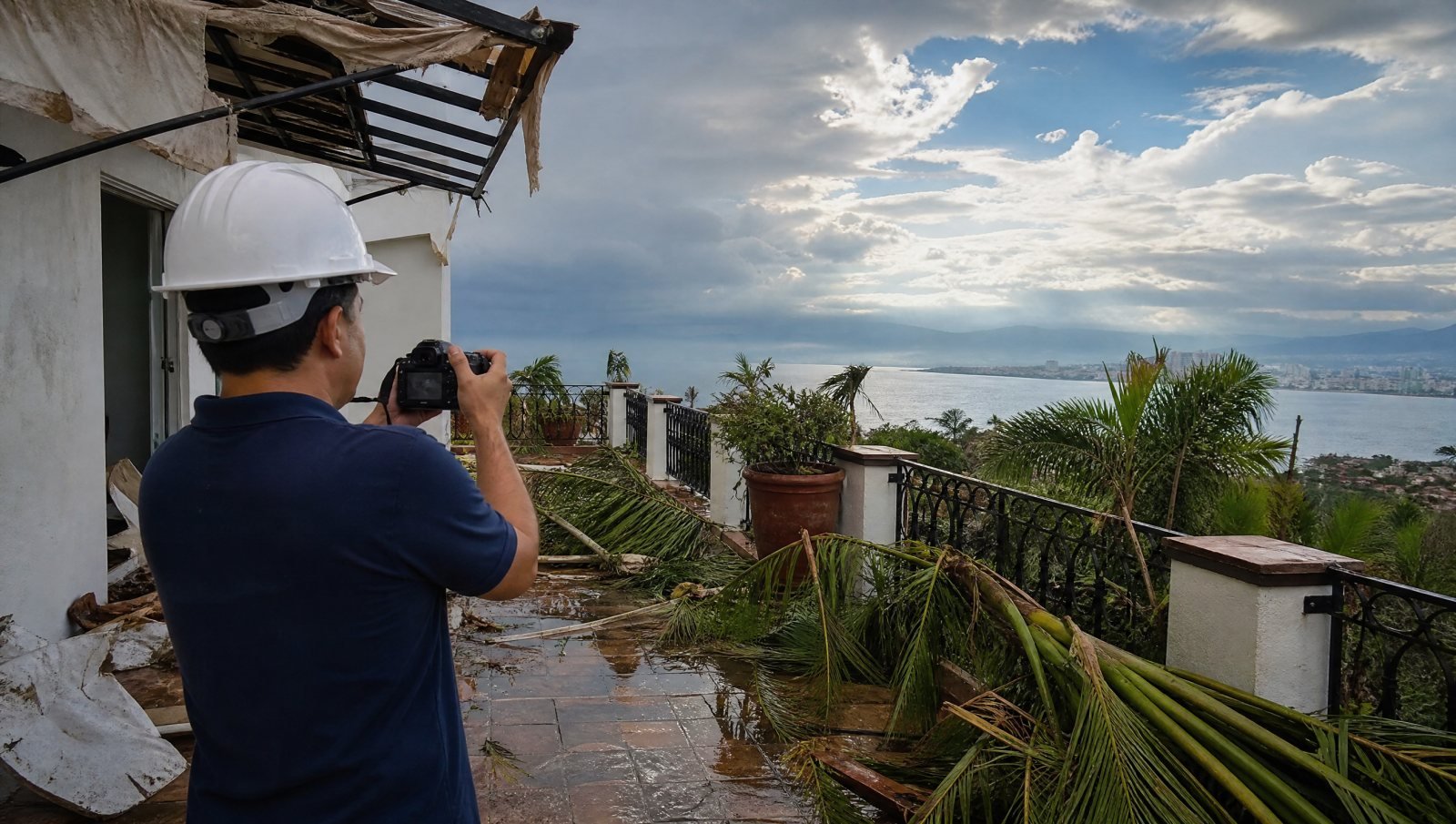
Why a storm damage inspection in Puerto Vallarta matters
The Pacific hurricane season runs roughly from June through November, and it overlaps almost completely with our rainy season. Most years the bay sees heavy downpours and strong wind rather than a direct hit, but even a storm that passes offshore can push water through a tired roof membrane, clog every drain on a terrace and send palm fronds through a window. A storm damage inspection in Puerto Vallarta gives you an objective, documented picture of your property at the two moments that matter: before the season starts and after a storm has passed.
What makes our approach different is who does the inspecting. PVR Contractors builds, remodels and maintains homes on this coast, so our inspector reads damage the way a builder does: not only what is wet or broken, but why it failed and what it realistically takes to fix it. If you want the full picture of how our division works, start with our home inspection Puerto Vallarta overview.
Before the season: the preparation inspection
Most storm damage in local homes does not come from the wind tearing off a structure. It comes from water getting in where it should not, and from objects becoming projectiles. A preparation visit in late spring or early summer focuses on the details that decide how your home behaves when the first big storm arrives.
Drains and water paths
Flat concrete roofs and terraces depend entirely on their drains. A single drain blocked by leaves, bougainvillea petals or a forgotten bucket can turn a roof into a shallow pool in minutes. We check every roof drain, gutter and yard drain, confirm that water actually flows toward them, and point out areas where ponding has already left stains.
Roof membranes and waterproofing
The membrane on your losa is your first line of defense. Salt air, sun and heat break it down faster than most owners expect. We look for lifted seams, cracks, blistering and spots where equipment was installed without proper sealing. When the membrane is near the end of its life, our report says so plainly, and our waterproofing team can quote a solution if you want one.
Shutters, openings and loose items
We test storm shutters and panels, review window and sliding door seals, and walk the terraces looking for furniture, planters, pots and decorations that should be stored or tied down. On hillside homes in Amapas or Conchas Chinas, we also look at retaining walls and the way runoff moves around the house.
Trees and palms
Coconut palms and large trees close to the house are beautiful until a gust drops a frond on a glass railing or a branch onto a mini-split. We flag trees that need trimming and note which ones lean toward the structure. We are not arborists, so for trees with serious structural concerns we recommend a specialist.
After the storm: a documented storm damage inspection in Puerto Vallarta
Once a storm has passed and it is safe to access the property, a storm damage inspection becomes a fact-finding exercise. Many of our clients are part-time residents who are in Canada or the United States when a storm hits, so the visit often doubles as their eyes on the ground. We can walk you through what we find on a video call while we are still on site.
Photos organized for your insurer
Our report organizes every finding by system: roof, envelope, openings, electrical, plumbing, gas, A/C, interiors and grounds. Each item has photos, a short description and a priority level: Safety, Urgent, Maintenance or Monitor. That structure makes it easy to share the report with your insurance company, your condo administración or your property manager, in English and Spanish.
To be clear about our role: we document conditions, we do not decide claims. Whether a specific item is covered depends on your policy and on the adjuster assigned by your insurer. Nothing in our report is legal or insurance advice. What we provide is a clear, timestamped record of what we observed, with our builder's opinion on the likely cause, which tends to make conversations with an adjuster more productive.
Separating storm damage from older problems
Not every crack or stain after a storm was caused by it. Rebar spalling from years of salt exposure, old membrane failures and slow plumbing leaks often show up for the first time during heavy rain. Because our inspector has built and repaired these systems, we can usually tell you whether a defect looks recent or long-standing, and we say so honestly in the report.
Water intrusion follow-up with thermal imaging
Water that enters during a storm does not always show up right away. It can travel inside a concrete slab or a block wall and appear as a stain or as mold weeks later. That is why we recommend a follow-up visit a few weeks after a significant event. Using a thermal camera and a moisture meter, we compare readings against the first visit to see whether areas are drying out or staying wet. If you want to understand how this technology works, see our thermal imaging inspection page.
Emergency stabilization and repairs
Sometimes the first job after a storm is simply to stop further damage: tarp an opening, clear a blocked drain, make an electrical circuit safe or secure a loose railing. Because PVR Contractors is also a working contractor, we can coordinate that stabilization quickly when you ask us to. For permanent repairs, our maintenance and remodeling teams can quote the work using the same report.
Here is the important part: you are never obligated to hire us. The inspection stands on its own. You can take our report to any contractor, to your insurer or to your building administration. Our job as inspector is to work for you and describe what we see accurately.
Areas we cover
We inspect throughout Puerto Vallarta, from the Zona Romántica and Centro to Amapas, Conchas Chinas, Versalles, Marina Vallarta, Fluvial and the Hotel Zone, and across the Riviera Nayarit, including Nuevo Vallarta, Bucerías, La Cruz de Huanacaxtle, Punta Mita and Sayulita. Beachfront condos, hillside villas and older homes in town each face different storm risks, and our checklist adapts to the property.
Make storm preparation a routine
For owners who are away for long periods, a single visit is often not enough. Our maintenance plans can include a pre-season inspection every spring and a check after each significant storm, so your home inspector in Puerto Vallarta already knows the property and can compare its condition over time. To schedule a visit, call or WhatsApp +52 322 301 6727 or write to info@pvrcontractors.com, or use our contact page.