
Why thermal imaging matters for homes in Puerto Vallarta
Most homes and condos around the bay are built with reinforced concrete and block, finished with plaster, paint and tile. That construction is durable, but it is also very good at hiding water. A slow leak inside a wall or under a flat roof can travel a long way before a stain appears, and a seller who repainted last month may not even know there was a problem. With humidity above 75% for much of the year and a rainy season that runs from June to October, moisture is the issue we see most often in Puerto Vallarta and Riviera Nayarit properties.
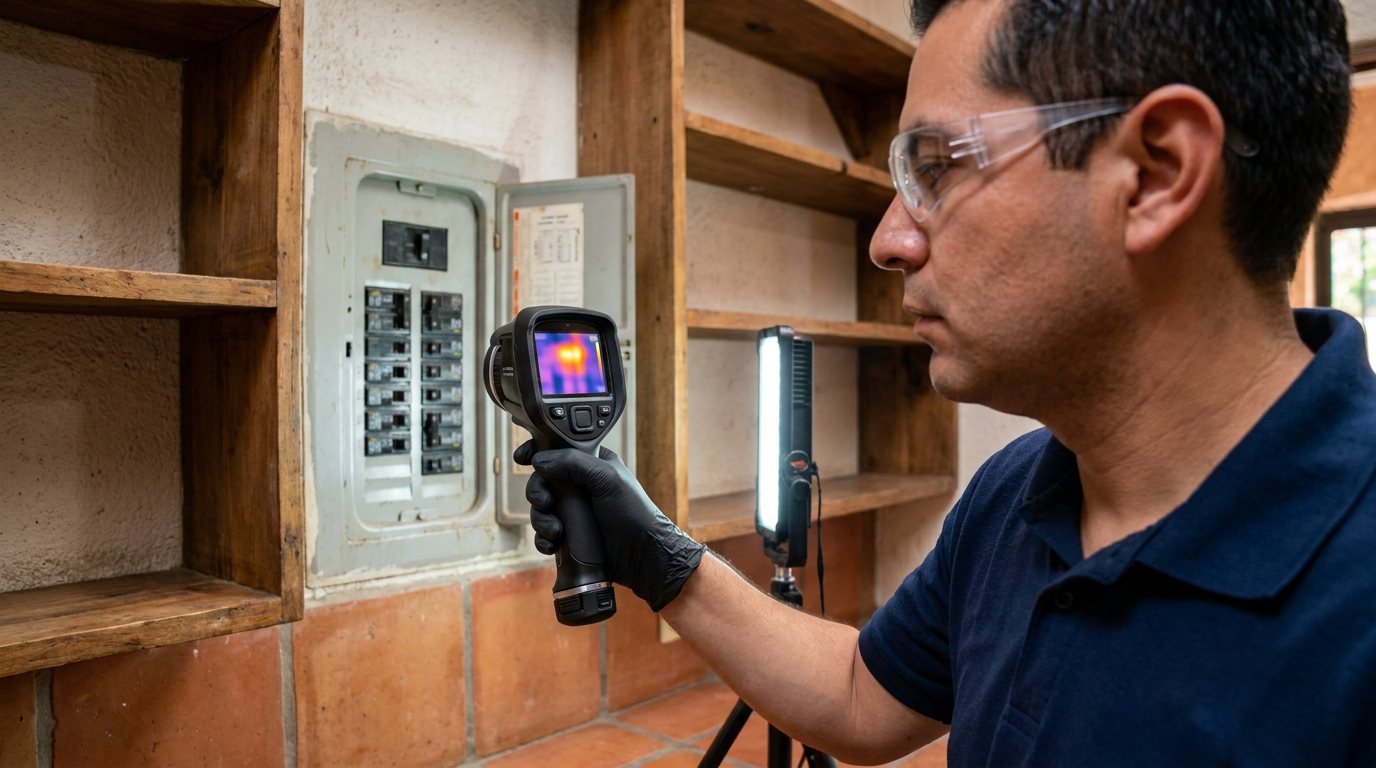
A thermal imaging inspection in Puerto Vallarta gives us a way to look for those patterns without drilling, cutting or lifting tile. The infrared camera reads surface temperatures and turns them into an image. Wet materials usually cool as water evaporates, warm water lines leave warm trails, and electrical connections that are failing tend to run hot. Those differences show up on screen in seconds, which helps us decide exactly where to take a closer look.
What a thermal imaging inspection in Puerto Vallarta can reveal
Hidden leaks behind tile and fresh paint
Bathrooms are the classic case. A cracked drain fitting or a failed shower pan can keep a wall damp for months while the visible surface looks perfect. On camera, the area around the leak often appears as an irregular cool shape that does not match the room. We then confirm with a moisture meter before calling it a finding, and we note in the report whether it looks active or old.
Roof and terrace water intrusion
Flat concrete roofs (losas) depend on a waterproofing membrane and on drains that actually drain. When the membrane cracks or a drain clogs, water can sit inside the slab or migrate to a ceiling several meters away. Thermal scans of ceilings below roof decks, terraces, planters and pool decks help us map where that water is going. If the system needs work, our waterproofing team can quote it, but you are never obligated to use us.
Slab-leak tracing
Hot-water lines embedded in a floor slab are common in older Vallarta homes. A leak in one of those lines warms the slab above it, and the camera can often follow that warm trail toward its source. It does not replace a plumber's pressure test, but it narrows the search so any repair starts in the right place instead of breaking up an entire floor. See our hydraulic installations page for how those repairs are usually handled.
Electrical hot spots in breaker panels
Salt air, loose lugs and overloaded circuits are a real combination on the coast. Under load, a poor connection heats up long before it fails or melts insulation. We scan panels, main disconnects and visible connections with the cover safely removed where possible, and flag any breaker or conductor running noticeably hotter than its neighbors as a Safety or Urgent item. Follow-up work belongs to a qualified electrician; our electrical installations crew is one option.
A/C condensate problems
Mini-split units produce a lot of condensate in this climate. When a drain line is kinked, poorly sloped or disconnected, water runs down the inside of the wall below the indoor unit. Infrared shows that wet stripe clearly, and it often explains the bubbling paint or mildew smell an owner has been fighting. Service and drain corrections are covered by our air conditioning team.
The limits of thermography, explained honestly
A thermal camera does not see water. It sees temperature differences on a surface. A cool spot can be moisture, but it can also be a shaded area, an air leak, a change in material or a spot where A/C air hits the wall. That is why we never report a leak based on the image alone. Every suspect area gets a moisture meter reading, and the report shows both the infrared image and the reading so you can see the evidence for yourself.
Conditions matter too. Thermography works best when there is a temperature difference between inside and outside, or when water is actively moving. We usually get clearer results in the morning or late afternoon, with the A/C running for a while, and after rain when roof leaks are active. Direct sun on a wall, strong wind or a house that has been closed up and at one uniform temperature can hide patterns. If conditions on the day are poor, we say so in the report rather than overstate what we saw.
- It finds where to look: anomalies that deserve a moisture reading or a closer inspection.
- It does not see through concrete: it reads surfaces, not the inside of a thick slab.
- It does not replace testing: plumbing pressure tests and electrical load testing are separate trades.
Included in every inspection, or booked on its own
Thermal imaging is part of our standard home inspection Puerto Vallarta service, whether you are buying a resale, receiving a new unit or reviewing a rental. You do not pay extra for the camera to come out. It is especially useful during a pre-purchase home inspection, when a fresh coat of paint can make a property look better than it is.
Owners who already know something is wrong can book it as a standalone leak and moisture investigation. Typical cases: a ceiling stain that keeps coming back after every rainy season, a neighbor in the condo below reporting water, a musty bedroom, or a power bill that suddenly rose. We focus the visit on that problem, trace it as far as non-invasive tools allow and tell you which trade should open things up.
Why a builder behind the camera makes a difference
Anyone can buy an infrared camera. Reading the image correctly takes knowing how the house was built. Because our home inspector in Puerto Vallarta comes from construction, we understand how block walls, losas, embedded plumbing and local electrical installations are actually put together, which helps separate a real leak from a harmless pattern. We also give you a realistic sense of what a repair usually involves, so you can negotiate or budget with better information.
The report is organized by system, with photos and infrared images side by side and each item ranked as Safety, Urgent, Maintenance or Monitor. It is available in English or Spanish, usually within 24 to 48 hours after the visit, and we are happy to walk you through it on a video call if you are out of the country. We work for you, not for the seller, the agent or a repair crew.
Where we scan
We work throughout Puerto Vallarta, including Zona Romántica, Centro, Amapas, Conchas Chinas, Versalles, Marina Vallarta, Fluvial and the Hotel Zone, and across Riviera Nayarit in Nuevo Vallarta, Bucerías, La Cruz de Huanacaxtle, Punta Mita and Sayulita. Hillside homes with large terraces and beachfront condos exposed to salt air are where thermal scans tend to earn their keep. To schedule, message us on WhatsApp at +52 322 301 6727 or use our contact page.