
Most buyers fall in love with a Puerto Vallarta property from the terrace. The view, the breeze and the sound of the bay do the selling, and the conversation quickly moves to furniture, rental potential and closing dates. What rarely comes up during that first visit is what is happening inside the concrete, under the roof membrane, behind the tile and inside the cistern. That is exactly where the expensive surprises live.
This guide walks through the twelve red flags we see most often when we inspect homes, condos and villas around Banderas Bay. For each one we explain what it looks like, why it happens on this coast, how serious it usually is, and how it tends to affect a negotiation. It is written for buyers who want to know what to look for when buying a house in Puerto Vallarta, and for anyone trying to understand a report they have just received.
Why Inspections Matter More in a Mexican Closing
In many parts of the United States and Canada, an inspection contingency is a routine step in the purchase process. In Mexico it is not. A typical closing in Puerto Vallarta or the Riviera Nayarit runs through a notario público, and for foreign buyers in the restricted coastal zone the property is usually held through a fideicomiso (bank trust). The notario verifies title, liens, taxes and identities. The notario does not inspect the building, test the plumbing or climb onto the roof.
Most properties are sold "as is"
Purchase agreements here commonly describe the property as sold in its current condition. Once the deed is signed, there is very little practical recourse for a leaking roof or a failing electrical panel that nobody mentioned. The window for discovering problems is the window between a signed offer and the closing — which is why the inspection clause, and the time you allow for it, should be negotiated into the promise-to-purchase agreement from the start. This is general information, not legal advice; your attorney and notario should confirm how your specific contract handles inspections and conditions.
The building methods are different
Homes here are built with reinforced concrete, block and flat roofs sealed with waterproofing membranes. Water comes from a municipal line into a cistern, is pushed up by a hydropneumatic pump or stored in a rooftop tinaco, and kitchens usually run on LP gas. A buyer who knows wood-frame houses with basements and pitched shingle roofs will not know where to look. A local home inspection Puerto Vallarta buyers can rely on is built around these systems, not around a generic checklist imported from another country.
The 12 Red Flags
These are not ranked by frequency, and not every property will show any of them. Several often appear together, because water is the common thread behind most of them.
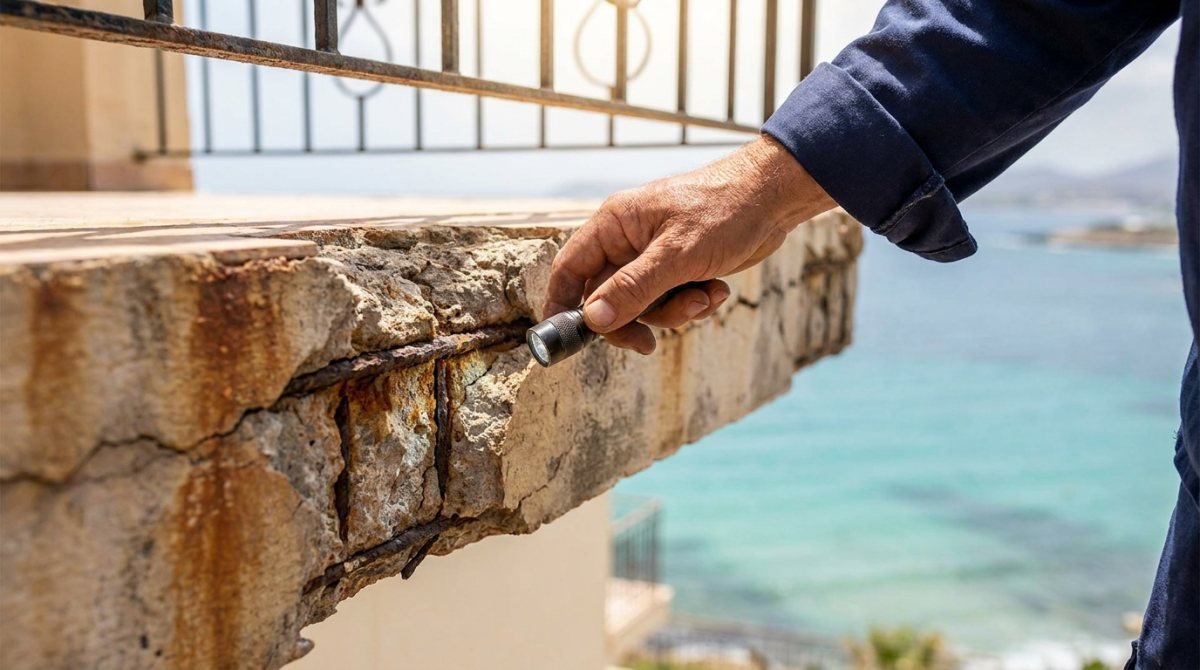
1. Exposed or rusting rebar and spalling concrete
What it looks like: Chunks of concrete breaking off balcony edges, slab undersides or columns, often with brown rust stains and visible steel bars behind them. Sometimes it starts as a hairline crack running parallel to the edge of a slab.
Why it happens here: Salt air and humidity reach the steel through cracks or thin concrete cover. Rusting steel expands, pushes the concrete outward and breaks it. Balconies, ocean-facing walls and pool areas are the usual suspects.
How serious: Ranges from a maintenance item on a single small area to a significant structural concern on balconies, columns or beams. It always deserves a closer look by someone who understands reinforced concrete.
Negotiation: Localized spalling is usually a repair credit or seller-repair request. Widespread corrosion in a condo building is a question for the HOA — is a special assessment coming?
2. Failed or aging roof waterproofing
What it looks like: Bubbles, cracks, ponding water and patched areas on the flat roof; stains, peeling paint or efflorescence (white salt deposits) on the ceilings below.
Why it happens here: Flat concrete roofs depend entirely on their membrane or coating. Intense sun degrades it, and the June–October rainy season tests it hard. Many sellers repaint the ceiling before listing without fixing the source.
How serious: Usually urgent rather than catastrophic, but water that has been entering for years can corrode rebar and feed mold.
Negotiation: One of the most common and most negotiable findings. A professional waterproofing estimate turns a vague worry into a concrete number to put on the table.
3. Hidden moisture in walls and floors
What it looks like: Often nothing — fresh paint, a dehumidifier running, a strong air freshener. Under a moisture meter or a thermal camera, damp areas show up behind showers, along exterior walls and under windows.
Why it happens here: Wind-driven rain, cracked exterior plaster, failed window seals and leaking pipes embedded in concrete. Homes that sit closed for months hide the problem well.
How serious: Depends on the source. A failed grout line is minor; a leaking embedded pipe means opening walls or floors.
Negotiation: Ask for the source to be identified before closing. A thermal imaging inspection is the best tool for finding what fresh paint is covering.
4. Mold in closets, bathrooms and closed rooms
What it looks like: Dark spotting on ceilings, behind furniture, inside closets and on window frames; a musty smell the moment the door opens.
Why it happens here: High humidity combined with air conditioning turned off for long periods, poor ventilation and any of the moisture sources above.
How serious: Surface mold from condensation is a maintenance issue. Recurring mold in the same spot usually points to a water problem that must be solved first.
Negotiation: Treat mold as a symptom. Negotiate on the cause, not on the cleaning.
5. Improvised or overloaded electrical work
What it looks like: Mixed wire colors, splices without junction boxes, extension cords as permanent wiring, missing or ineffective grounding, no GFCI protection near water, and a panel crowded with additions.
Why it happens here: Many homes were expanded in stages over the years, with each owner adding circuits for mini-splits, pool equipment or a new kitchen. Salt air also corrodes breakers and terminals.
How serious: Often a safety priority. Corroded panels and missing grounding are fire and shock risks, not cosmetic issues.
Negotiation: Strong grounds for a seller repair or credit. A quote from a qualified electrical installations team helps define the scope.
6. LP gas installations that are not up to standard
What it looks like: Flexible hoses where rigid lines belong, corroded regulators, stationary tanks without proper supports, gas lines running through enclosed spaces, and no accessible shutoff valve.
Why it happens here: Gas lines are often modified during remodels, and outdoor components take a beating from sun and salt.
How serious: Gas findings are always flagged as Safety items, the top priority in a report.
Negotiation: These should be corrected before you move in, regardless of who pays. Ask for repairs by a specialized gas installations contractor, with a leak test afterwards.
7. Cistern, tinaco and pump problems
What it looks like: Cracked or unsealed cisterns, missing lids, sediment, a hydropneumatic pump cycling constantly, low pressure upstairs, or a tinaco showing UV damage.
Why it happens here: These systems are out of sight and rarely maintained. A pump that runs non-stop often signals a leak somewhere in the house.
How serious: Ranges from maintenance (cleaning and sealing) to urgent (a pump about to fail or a cistern contaminated by groundwater).
Negotiation: Usually modest on its own, but a constantly cycling pump is a clue worth chasing before closing.
8. Old plumbing and drainage issues
What it looks like: Galvanized pipes with rust-colored water, slow drains, sewer odors, water-heater corrosion and stains under sinks.
Why it happens here: Older homes still have original galvanized lines, and drain slopes in concrete slabs are not always correct. A camera or water test can reveal what visual checks miss.
How serious: Moderate to significant. Replacing pipes embedded in concrete is invasive work.
Negotiation: Get a scope from a hydraulic installations specialist before agreeing to a number.
9. Structural cracks and settlement
What it looks like: Diagonal cracks from the corners of doors and windows, stair-step cracks in block walls, doors that no longer close, sloping floors and gaps between slabs and walls.
Why it happens here: Hillside lots, fill soils near rivers and estuaries, poor drainage around foundations and seismic activity all contribute. Not every crack is structural; many are plaster shrinkage.
How serious: The inspector's job is to distinguish cosmetic cracks from active movement. Anything that suggests movement should be evaluated by a structural engineer.
Negotiation: Potentially a deal-changer. Do not close until you understand the cause. Our foundations team can explain what a repair would involve.
10. Corroded windows, railings and metalwork
What it looks like: Pitted aluminum frames, failed seals that let rain in, rusted iron railings, loose anchors and stained concrete beneath them.
Why it happens here: Salt air attacks low-grade aluminum, iron and lower grades of stainless steel. Loose railing anchors are a fall risk.
How serious: Railings are a Safety item; leaking windows are urgent; cosmetic corrosion is maintenance.
Negotiation: A common credit request, especially when several windows need replacing.
11. Air conditioning near the end of its life
What it looks like: Mini-splits with corroded outdoor coils, weak cooling, condensate leaking inside, and units mounted where salt spray hits them directly.
Why it happens here: Equipment works hard almost all year and the coastal environment shortens its service life. Missing maintenance shows quickly.
How serious: Usually a maintenance or budget item, not a safety issue — but a condensate line draining into a wall is a moisture problem.
Negotiation: Note the condition and plan for replacement; ask for credit only when units are clearly failing.
12. Unpermitted additions and changes
What it looks like: A rooftop room, an enclosed terrace, an extra bathroom or a pool that does not match the plans or the property description.
Why it happens here: Homes are often expanded informally over the years. Inspectors spot construction that looks different from the original work; confirming its legal status is a job for your notario and attorney.
How serious: The construction may be sound or poor; the legal question is separate and can affect the deed, taxes and future sale. This is not legal advice.
Negotiation: Raise it early. It can affect price, timing or whether the purchase moves forward at all.
How to Read the Priorities in an Inspection Report
A long report can feel alarming. The key is to read it by priority, not by page count. Our reports are bilingual, organized by system with photos, and every finding carries one of four levels:
- Safety: conditions that could hurt someone now — gas, electrical hazards, loose railings, structural concerns. These come first.
- Urgent: active problems that will grow quickly and cost more if ignored, such as roof leaks or failing pumps.
- Maintenance: normal upkeep that a well-run property needs, like resealing, cleaning or replacing worn parts.
- Monitor: items that are fine today but worth watching, such as a hairline crack or an older appliance.
Twenty Maintenance items on a well-kept villa can be a better sign than two Urgent items on a freshly painted condo. Because a builder-first inspector understands what repairs actually involve, the report can also help you estimate the scale of the work, which is what turns findings into a negotiation strategy. If you are not in town, a video-call review lets you walk through the findings with the inspector.
What to Do With the Findings
Renegotiate the price
For problems with a clear scope — waterproofing, electrical upgrades, window replacement — a price reduction or closing credit lets you hire your own contractor and control the quality of the work.
Ask the seller to repair
This works best for Safety items that must be fixed before you take possession, such as gas or electrical hazards. Ask for the work in writing, specify who performs it and request a re-inspection before closing.
Walk away
Signs of structural movement, widespread rebar corrosion or unresolved legal issues with additions can justify stepping back, if your agreement allows it. That is why the inspection period and your exit conditions need to be written into the promise-to-purchase contract — something to confirm with your attorney, as this is not legal advice.
Keep the report after closing
A good report becomes your maintenance plan for the first years of ownership. Monitor items tell you what to check after each rainy season.
Condos vs. Houses vs. New Construction
Condos
In a condo you own your unit, but you share the building. The inspection covers what is inside your walls — installations, windows, moisture, finishes — and what you can see of the common areas: roof, façades, balconies, pumps and the general state of maintenance. Ask the administration for recent assembly minutes and any planned special assessments. A dedicated condo inspection focuses on exactly that combination.
Single-family houses and villas
Every system is yours: roof, cistern, pump, gas, pool, retaining walls and drainage. A house inspection takes longer and the list of possible findings is broader, but you also have full control over the repairs.
New construction and pre-sales
New does not mean defect-free. Common findings include incomplete waterproofing, poorly sealed windows, unfinished electrical work and drainage slopes that send water toward the house. Inspecting before you accept delivery — while the developer is still obligated to fix punch-list items — is far easier than chasing repairs later. See our new construction inspection service for how that works.
Choosing a Home Inspector in Puerto Vallarta
Look for someone who knows reinforced concrete, flat roofs, cisterns, LP gas and coastal corrosion, who uses a thermal camera and a moisture meter, and who delivers a clear, prioritized report with photos in the language you need. Independence matters too: the inspector's job is to describe the property, not to sell you repairs. When you hire a home inspector in Puerto Vallarta through PVR Contractors, you are never obligated to hire us for any repair work. We inspect in Puerto Vallarta, Jalisco, and in the Riviera Nayarit communities of Bahía de Banderas, including Nuevo Vallarta, Bucerías, La Cruz de Huanacaxtle, Punta Mita and Sayulita.
Frequently Asked Questions About Home Inspection Red Flags in Puerto Vallarta
Is a home inspection required to buy property in Puerto Vallarta?
No. Neither the notario nor the bank that manages the fideicomiso requires one. That is precisely why buyers should make it a condition of their offer. This is general information, not legal advice.
When should I schedule the inspection?
After your offer is accepted and before the closing, within the inspection period set in your promise-to-purchase agreement. Booking early leaves time to get repair quotes and negotiate.
What is the most common problem found in Puerto Vallarta homes?
Water in its many forms: failed roof waterproofing, moisture in walls, leaking windows and the corrosion and mold that follow. Most other red flags on this list are connected to it.
Can an inspection find leaks inside concrete walls?
It can find the evidence. Thermal imaging and moisture readings reveal damp areas behind finishes without opening walls; pinpointing the exact pipe may then require a plumber.
Should I inspect a brand-new condo?
Yes. New units often have waterproofing, window and electrical issues that are easiest to get fixed before you accept delivery from the developer.
Is the inspection useful during the rainy season?
Very. From June to October active leaks and drainage problems are easier to see. In the dry season, thermal imaging and moisture readings help reveal past water entry.
Can I attend the inspection if I live abroad?
Yes. You receive a bilingual photo report, and we can review it with you by video call so you understand every priority before you negotiate.
Will the inspector tell me whether to buy?
No. The inspector describes the condition of the property and the likely scope of repairs. The decision belongs to you, your agent and your attorney.
Inspect Before You Sign
The best moment to discover a red flag is before the deed is signed, not after the first rainy season. If you are under contract on a condo, villa or house in Puerto Vallarta or the Riviera Nayarit, contact PVR Contractors by phone or WhatsApp at +52 322 301 6727 or at info@pvrcontractors.com to schedule an independent inspection with a bilingual, prioritized report.