
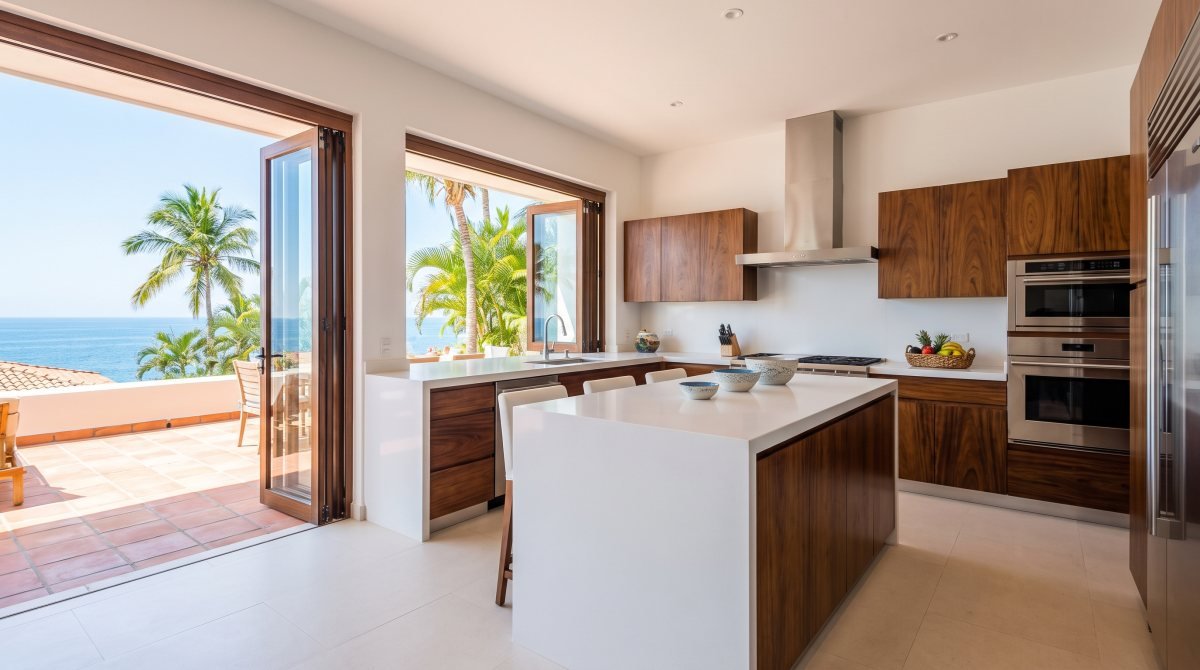
The kitchen is the room where a Puerto Vallarta home earns its keep. It is where owners actually live when they are in town, where guests gather in a vacation rental, and where a buyer decides in about ninety seconds whether the asking price makes sense. It is also the room that takes the most punishment from our climate. Salt air corrodes hinges and appliance housings, humidity swells the wrong kind of cabinet board, the afternoon sun bleaches finishes, and a kitchen that looked perfect in a showroom in Guadalajara or Houston can look tired on the coast in three rainy seasons.
We remodel kitchens in condos, villas and family homes across Banderas Bay, and the difference between a kitchen that lasts twenty years here and one that needs rework in five almost never comes down to the price of the countertop. It comes down to decisions made before demolition: the right materials for a marine environment, proper ventilation, honest plumbing and electrical upgrades, and a realistic schedule. This guide walks through all of it — design for the coastal climate, the materials that work, cabinets, appliances, timeline, and the mistakes we see most often in kitchen remodeling in Puerto Vallarta.
Why Kitchen Remodeling in Puerto Vallarta Is Different
A kitchen remodel anywhere involves the same trades: demolition, plumbing, electrical, carpentry, stone, tile and paint. What changes in Puerto Vallarta is the environment every one of those trades has to survive in.
Salt air reaches further than you think
Owners in the Zona Romántica or the Hotel Zone expect corrosion because they can see the water. Owners up in Conchas Chinas, Amapas or the hills behind Versalles are often surprised to find the same rust spots on their range hood. Onshore breezes carry salt aerosol well inland, and it settles on every metal surface in the kitchen — hinges, drawer slides, faucet bodies, appliance panels, even the screws inside the cabinet boxes. Any metal we specify for a coastal kitchen is chosen with that in mind.
Humidity is the real enemy of cabinetry
For several months of the year, relative humidity in Puerto Vallarta stays high day and night, and many second homes sit closed with the air conditioning off for weeks at a time. That combination is brutal for low-grade particleboard and MDF: the edges absorb moisture, swell, and the laminate lifts. Mold appears behind the sink base and inside upper cabinets on exterior walls. Cabinet construction, not cabinet style, is what determines how a kitchen ages here.
Heat and sun change how a kitchen works
Many Vallarta kitchens open onto a terrace or sit under large windows facing the view. That is wonderful for living and difficult for finishes: direct sun fades wood stains, some engineered stones and vinyl wraps, and it turns a dark countertop into a hot plate. Heat from cooking adds to an already warm room, so ventilation and air-conditioning load deserve as much attention as the layout.
Designing a Kitchen for the Puerto Vallarta Climate
Good design in a coastal kitchen is not a style — you can do modern, Mexican hacienda, tropical minimalist or classic — it is a set of functional choices that make any style last.
Layout: work triangle, flow and the terrace
The classic work triangle between sink, cooktop and refrigerator still matters, but in Puerto Vallarta the kitchen usually has a fourth point: the door to the terrace, the grill or the outdoor dining table. We plan circulation so that someone carrying plates outside never crosses the cook's path, and so the island becomes a natural serving station for an indoor–outdoor home. In vacation rentals, where several guests cook at once, a second prep sink or a longer island often matters more than one more cabinet.
Ventilation and air conditioning
A range hood that actually exhausts to the outside — not a recirculating unit hidden in a cabinet — is one of the best investments in a humid climate. It removes grease, heat and moisture before they condense on cabinets and ceilings. Cross ventilation from operable windows helps on mild days, and for closed-up homes the kitchen should be part of a properly sized air-conditioning or dehumidification plan so it does not become the dampest room in the house while the owners are away.
Light, shade and heat gain
We look at where the afternoon sun hits before choosing finishes. A west-facing window over the sink may need a deeper overhang, a solar film or a lighter countertop. Layered lighting — ambient ceiling light, task lighting under the upper cabinets and a few decorative pendants over the island — makes the kitchen usable after dark without heating the room; LED fixtures rated for damp locations are the norm in our projects, supplied and installed as part of our lighting and electrical accessories work.
Countertop Materials for Kitchen Remodeling in Puerto Vallarta
Countertops set the tone of the kitchen and take the hardest daily use. The good news is that several excellent options perform well in our climate; the key is matching the material to how the kitchen will be used. Fabrication and installation are handled through our marble and granite countertop service.
Quartz
Engineered quartz is the most requested surface in our kitchen projects. It is non-porous, so it does not need sealing and resists staining from lime, coffee, wine and cooking oil — useful in rentals where you cannot control what guests do. It comes in consistent slabs, which makes seams easier to plan on long islands. The caveats: quartz does not love direct high heat (always use trivets), and some pigments can shift color over years of strong UV exposure, so we avoid it on outdoor bars that sit in full sun.
Granite
Granite is a natural stone that handles heat, sun and heavy use very well, which makes it a strong choice for kitchens that open onto terraces and for outdoor kitchens. It is slightly porous, so it needs a penetrating sealer and periodic resealing — easy maintenance, but it has to be on the schedule. Mexico has access to a wide range of granites, and a honed or leathered finish gives a softer, more contemporary look than the high-gloss polish of the 1990s.
Parota and other hardwoods
Parota (guanacaste) is the regional hardwood that gives Pacific-coast homes much of their warmth. Wide parota slabs make stunning island tops, breakfast bars and open shelves. Wood near a sink needs a marine-grade or food-safe oil finish, regular maintenance and good ventilation; used thoughtfully — on the island end or the dining side rather than around the sink — it is one of the best ways to make a modern kitchen feel rooted in the place.
Porcelain slabs and tile
Large-format porcelain slabs are gaining ground for countertops and full-height backsplashes. They are thin, light, very resistant to heat, UV and stains, and they can wrap an island with minimal joints. They require an experienced installer because the edges chip if handled carelessly, but for sunny kitchens and outdoor cooking areas they are an excellent option.
Metals, Hardware and Stainless Steel 316
If there is one specification we insist on in coastal kitchens, it is the grade of stainless steel. Most appliances, sinks and hardware sold as "stainless" are grade 304 or lower. That is fine in a dry inland city, but in salt air it develops tea-colored staining and pitting surprisingly fast.
Why 316 matters on the coast
Stainless steel 316 contains molybdenum, which dramatically improves resistance to chlorides — exactly what salt air deposits on every surface. For sinks, faucets, exposed shelving brackets, outdoor grill components, handles and pulls, 316 (often sold as "marine grade") is worth the higher price. Where 316 is not available, such as some appliance fronts, regular cleaning with fresh water and a mild cleaner prevents most staining.
Cabinets for Humid Coastal Kitchens
Cabinetry is usually the largest single line in a kitchen remodeling budget in Puerto Vallarta, and it is where cheap choices show up first. Our carpentry workshop builds custom cabinets for the local climate, and these are the criteria we follow.
Box construction
Marine plywood or moisture-resistant (MR) board for the cabinet boxes, with all edges sealed, is the baseline. Sink bases deserve special treatment: a waterproof liner or a solid-surface floor panel, and enough clearance around plumbing to spot a leak early. Standard particleboard, even with a nice laminate on top, is the most common source of failure we see when we open up an older kitchen.
Door and drawer fronts
Options that perform well include solid wood (parota, cedar or pine with a sealed finish), high-pressure laminate on a moisture-resistant core, and lacquered or polyurethane-painted MR board. Thermofoil and cheap vinyl wraps tend to peel in heat and humidity. For a natural look with less maintenance, a wood veneer on a stable core is a good compromise.
Appliances for a Coastal Kitchen
Appliances are where coastal conditions, power quality and service availability all meet.
Choose brands with local service
A beautiful imported range is a problem if nobody in Puerto Vallarta or Guadalajara can repair it. Before choosing, we confirm that the brand has authorized service and parts in the region. For rental properties, that often means choosing a well-supported mainstream brand over a boutique one.
Protect electronics from power fluctuations
Voltage variations and brief outages are common during the rainy season. Refrigerators, induction cooktops, dishwashers and wine coolers should be on dedicated circuits with surge protection, and in some homes a voltage regulator is worth adding. This is part of the electrical review in every kitchen we remodel through our electrical installations team.
Gas or induction?
Many Vallarta homes cook with LP gas. If you keep gas, the remodel is the moment to inspect the line, regulator and connections, and to install a proper shutoff valve accessible from the kitchen — work done by our gas installations specialists. Induction is increasingly popular: it adds almost no heat to the room, is easy to clean and safer for rentals, but it needs the right electrical capacity and compatible cookware.
Plumbing, Electrical and Waterproofing Before the Finishes
The part of a kitchen remodel no one sees is the part that decides whether the new kitchen stays dry and safe.
Plumbing
If the home still has old galvanized pipes or improvised connections, replace them while the walls are open. Moving the sink to an island requires planning the drain slope and venting correctly, which is often more complex in a concrete slab than homeowners expect. Our hydraulic installations team handles supply, drainage, filters and pressure pumps.
Electrical
Modern kitchens need more circuits than most older Vallarta homes have: dedicated lines for major appliances, GFCI-protected outlets near water, enough outlets on the island, and a panel that can handle the load. Upgrading the wiring during the remodel is far cheaper than opening finished walls later.
Waterproofing and moisture
Floors under dishwashers and sinks, walls behind the backsplash and any kitchen on an upper floor above living space benefit from a waterproofing membrane before tile goes down. On exterior walls that get wind-driven rain, we check for moisture entry from outside as well. Our waterproofing crew handles those details as part of the remodel.
Kitchen Remodeling Timeline in Puerto Vallarta
Every project is different, but a realistic sequence helps set expectations. The durations below are approximate and depend on the scope, the building and material availability.
- Consultation and site survey: measurements, photos, and inspection of plumbing, electrical, gas and structure.
- Design and budget: layout, material selection, appliance specifications and an itemized quote — typically a few weeks, depending on how quickly decisions are made.
- Building or HOA approvals: condo administrations often require notice, work schedules and insurance; larger changes may require municipal permits.
- Fabrication lead time: custom cabinets and stone templates usually need several weeks; imported appliances can take longer, so they are ordered early.
- Demolition and rough-in: removal, plumbing, electrical, gas and waterproofing — often one to two weeks for a standard kitchen.
- Installation: cabinets, countertop templating and installation, backsplash, floors, fixtures and appliances.
- Finishing and punch list: paint, adjustments, cleaning and a walk-through.
As a rough guide, many standard kitchen remodels take somewhere in the range of six to twelve weeks from the start of work, and larger or more custom kitchens take longer. High season (roughly November to April) is when most owners are in town and many buildings restrict noisy work, so planning a remodel for the summer months — when the home is often empty — can make the schedule easier, provided materials are ordered in advance and the crew manages the rain.
Budgeting a Kitchen Remodel in Puerto Vallarta
We do not publish price lists because the variation is too large: a cosmetic refresh of an existing layout and a full custom kitchen with a parota island and imported appliances are completely different projects. What we can say is where the money typically goes:
- Cabinetry: often the largest portion, especially for custom, moisture-resistant construction.
- Countertops: depends on the material, slab count and edge details.
- Appliances: ranges from mainstream to premium; imported models add freight and lead time.
- Installations: plumbing, electrical and gas upgrades — higher in older homes.
- Finishes and labor: floors, backsplash, paint, lighting, and project management.
Keep a contingency — many contractors recommend around 10–20% — for conditions discovered after demolition, such as damaged pipes or wiring. An itemized quote, not a single lump sum, is the best protection for your budget.
Common Kitchen Remodeling Mistakes in Puerto Vallarta
1. Choosing materials for the showroom, not the coast
Particleboard boxes, 304 or unspecified stainless, and vinyl-wrapped doors all look fine on day one. They are the first things to fail in salt air and humidity.
2. Skipping the exterior-vented hood
Recirculating hoods leave grease and moisture in the room. On the coast, that means mold and sticky cabinets.
3. Putting new finishes over old installations
Installing a beautiful countertop over a leaking drain or overloaded circuit is the most expensive mistake on this list, because fixing it later means demolishing new work.
4. Ignoring condo and HOA rules
Buildings can stop work that violates schedules or noise rules, and some require approval before any change to plumbing or structure. Get the rules in writing before the crew arrives.
5. Ordering appliances too late
Cabinet openings are built around specific appliances. Changing a model after the cabinets are made means costly modifications, and a late delivery can stall the whole project.
6. Forgetting maintenance
Stone sealing, wood oiling, hood filter cleaning and a fresh-water wipe of stainless steel are small tasks that double the life of a coastal kitchen. Our maintenance team can handle them on a schedule for owners who are away.
How PVR Contractors Handles Kitchen Remodeling in Puerto Vallarta
Our kitchen remodeling service brings design, carpentry, stone, installations and finishing under one team, so the owner has one point of contact and one schedule. A typical project includes:
- A site visit and inspection of existing plumbing, electrical and gas.
- Layout and material recommendations for the coastal climate, coordinated with our interior design team when needed.
- Custom cabinets from our own carpentry workshop.
- Countertop fabrication and installation.
- Coordination with the condo administration or HOA.
- Weekly updates with photos for owners who are not in town.
- A final walk-through, warranty documentation and care instructions for every material.
Kitchens are often part of a larger renovation; if you are updating bathrooms, floors or the whole home at the same time, our remodeling contractor team can coordinate the full scope. We work in Puerto Vallarta and throughout Banderas Bay — see our service areas.
Frequently Asked Questions About Kitchen Remodeling in Puerto Vallarta
How long does a kitchen remodel take in Puerto Vallarta?
It depends on scope, but many standard kitchen remodels take roughly six to twelve weeks of on-site work, plus design and fabrication time beforehand. Custom cabinetry, imported appliances and condo work-hour restrictions can extend the schedule.
What is the best countertop for a coastal kitchen?
Quartz is the most practical for everyday use because it is non-porous and stain-resistant. Granite and porcelain slabs handle sun and heat better, which makes them good choices for kitchens open to a terrace or for outdoor kitchens.
Is stainless steel 316 really necessary?
For sinks, faucets, hardware and anything exposed near the terrace, yes — it resists salt-air corrosion far better than 304. For appliance fronts, where 316 is rarely an option, regular cleaning prevents most staining.
Can I use wood in a humid kitchen?
Yes, if it is the right wood with the right finish. Parota and other hardwoods perform well when every surface is sealed and the kitchen is ventilated. Avoid unsealed wood right around the sink.
Do I need a permit to remodel my kitchen in Puerto Vallarta?
A cosmetic remodel often only needs condo or HOA approval, while structural changes, moving walls or major installation work may require a municipal permit. We review each case during the site visit.
Can the remodel happen while I am away?
Yes. Many of our clients live outside Mexico part of the year. We handle access, building coordination and deliveries, and send regular photo updates.
Plan Your Kitchen Remodel
A kitchen that is designed for the coast looks better for longer, costs less to maintain and adds real value to a Puerto Vallarta property. If you are planning a kitchen remodel in a condo, villa or family home, contact PVR Contractors for a site visit and an itemized, no-obligation quote.